Philippines at a Critical Stage in New Economic Crime and Geopolitics Index
- Posted by Mara Di Berardo
- On 29 September 2025
- 0 Comments
- Economic Crime and Geopolitics Index, Philippines Node, Pinoy Scientist, South Asia Foresight Network Node
The Philippines has been placed at a score of 69.2 in the newly developed Economic Crime and Geopolitics Index (ECGI), according to Asanga Abeyagoonasekera, international security and geopolitics analyst and Executive Director of the South Asia Foresight Network. The ECGI, introduced as a more comprehensive measure of political risk, evaluates not only corruption perception but also economic crime, public response, and geopolitical factors.
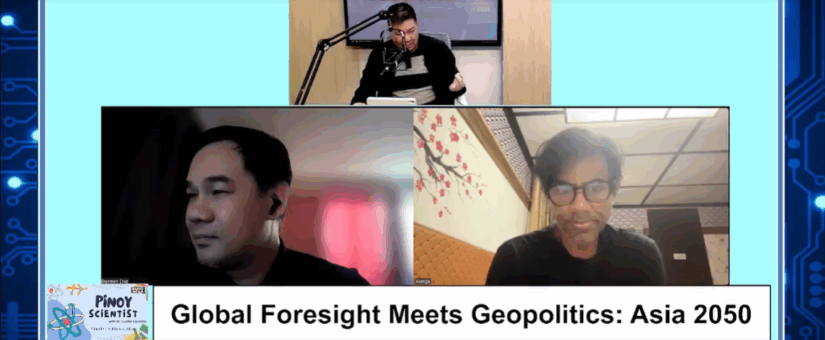
The findings and their implications for the Philippines were discussed in the program Lakbay Kinabukasan on Radyo Agila’s Pinoy Scientist, hosted by Custer Deocaris, also known as the “Pinoy Scientist,” with co-host Shermon Cruz, UNESCO Chair on Anticipatory Governance and Regenerative Cities at Northwestern University and Chair of The Millennium Project Philippines Node. The program, which regularly explores the intersections of science, technology, and futures thinking, served as a platform for Dr. Abeyagoonasekera to present the index and its significance for Philippine governance.
Abeyagoonasekera explained that the ECGI was created to capture the complex realities confronting nations across South and Southeast Asia. Traditional indices such as the Corruption Perceptions Index, he said, offer only a narrow lens. By including illicit financial activities, fraudulent projects, and societal responses to governance challenges, the ECGI delivers a more accurate picture of political uncertainty and institutional resilience.
The Philippines’ score of 69.2 places it at a critical stage, where decisive reforms, stronger accountability, and transparent governance will be essential to safeguard stability. While other nations in the region that crossed into higher risk zones have already endured political and economic strain, the Philippines, according to Dr. Abeyagoonasekera, still has the opportunity to act proactively and strengthen its institutions before pressures intensify.
Abeyagoonasekera also underscored that governance today extends beyond policy frameworks to the relationship between leaders and citizens. Building trust through transparency and open dialogue, particularly with younger generations, will be vital in sustaining stability and progress. The ECGI is not only a diagnostic tool but also an early warning system, he emphasized. It enables governments, investors, and civil society to anticipate challenges, address vulnerabilities, and reinforce public trust. “This is the time for stronger accountability, better governance, and leadership that puts people first.”
The full report on the ECGI will be released in December 2025, offering detailed analysis across South and Southeast Asia and providing a valuable guide for policymakers and stakeholders seeking to strengthen governance and national resilience.
Watch the full recording of the Lakbay Kinabukasan interview on Radyo Aguila’s Pinoy Scientist.