

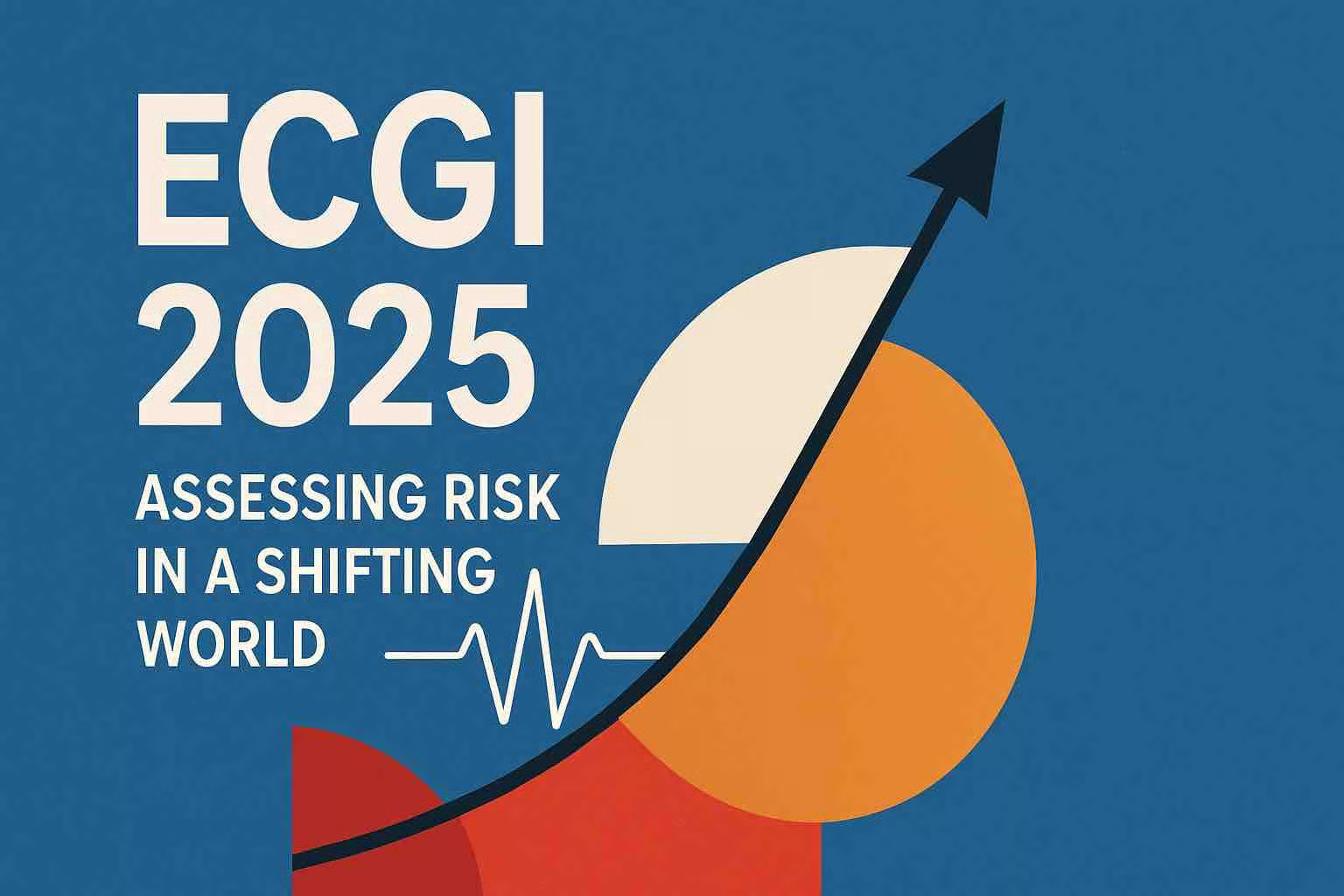
New Global Index Maps Risks from Economic Crime and Geopolitics
- On 29 September 2025
- 0 Comments
- Economic Crime and Geopolitics Index, SAFN, Sri Lanka
A new international tool aims to shed light on how corruption, illicit finance, and global power struggles interact to shape political and economic stability. The Economic Crime and Geopolitics Index (ECGI), launched this month by the South Asia Foresight Network (SAFN) under the Millennium Project, provides a first-of-its-kind framework to assess national vulnerabilities.
ECGI is a pioneering global tool that measures how corruption, financial crime, and geopolitical influence intersect to shape national risk. It underscores urgent realities—such as Nepal’s recent people’s uprising—where corruption, youth-led protests, and external pressures combine to drive national instability. The Index provides governments, regulators, and international organizations with a vital framework to anticipate risks, strengthen democratic governance, and build resilience.
The initiative is the designed by Asanga Abeyagoonasekera, SAFN’s Executive Director and a Sri Lankan scholar based in Washington, D.C., and falls within the Economic Crime and Geopolitics Center (ECGC) recently launched by SAFN as one of the first global initiatives dedicated to addressing the complex relationship between economic crime and geopolitics. According to Abeyagoonasekera, the index goes beyond traditional corruption or crime rankings by combining governance data with measures of state resilience and external influence.
The ECGI draws on four categories to determine a country’s overall risk: Governance integrity, measured through corruption perception; Scale of economic crime, including money laundering and organized networks; Institutional capacity, such as regulatory and enforcement effectiveness; Geopolitical pressure, reflecting foreign military, economic, and diplomatic leverage.
Pilot results from more than 70 countries highlight worrying trends in South and Southeast Asia. Pakistan, Sri Lanka, Nepal, Bangladesh, and Indonesia are all classified as high-risk, with ongoing instability ranging from civil conflict in Myanmar to recurring political breakdowns in Pakistan. The Philippines, while not yet in the same category, is moving closer due to growing exposure to corruption and external influence.
Abeyagoonasekera argues the ECGI is not just a research product but a tool to anticipate unrest. The SAFN plans to refine the index through its new Economic Crime and Geopolitics Centre in Washington, D.C., with a full report expected by December 2025.
For more information, visit SAFN website.
0 Comments