Futuuri 2/2025 – Special Conference Issue: Futures of Technologies
- Posted by Mara Di Berardo
- On 9 October 2025
- 0 Comments
- futures conference, futuuri, Helsinki Node, Italy Node
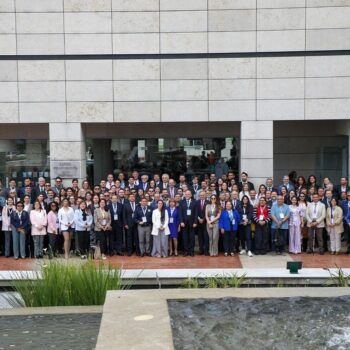
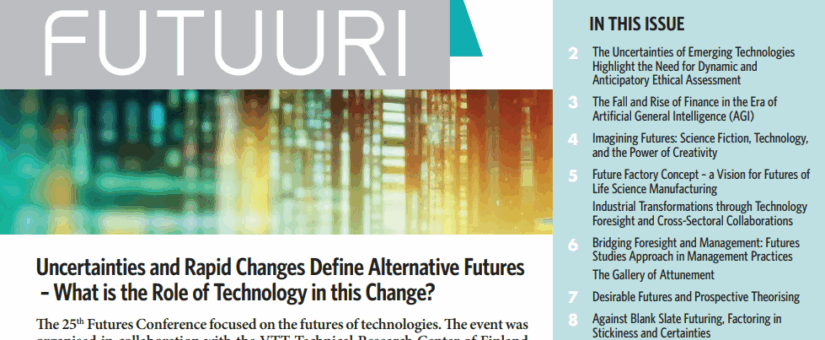
The special conference issue of Futuuri 2/2025, just published by the Finland Futures Research Centre hosting the Helsinki Node of The Millennium Project, presents articles that summarise keynote speeches and introduce selected sessions held during the 25th Futures Conference on “Futures of Technologies – Mutual Shaping of Socio-Technical Transformation“, which took place on 10–12 June 2025 at Logomo, Turku, Finland. The event brought together 330 participants from 39 countries and included keynote lectures, parallel sessions, and participatory workshops.
Among the keynote speeches, Jerome C. Glenn delivered a presentation on “Future of Artificial Intelligence: Issues, Opportunities, and Geopolitical Synergies.” He distinguished between narrow, general, and advanced forms of AI, outlined the potential benefits and risks of Artificial General Intelligence (AGI), and emphasised the urgent need for international cooperation to ensure responsible development. Glenn warned that actions must be taken within the next three years to improve the chances of safe AGI evolution that benefits all humanity.
Rohit Talwar (Co-Chair of the UK Node of The Millennium Project) discussed how advances in Artificial General Intelligence could transform global finance. His keynote “The Fall and Rise of Finance in the Era of Artificial General Intelligence (AGI)” envisioned a reinvention of consumer financial services and a redefinition of the concept of money itself. Talwar explored the emergence of new currency models and decentralised systems, highlighting both their opportunities and the ethical questions they raise about equity, sustainability, and the role of human values in technological transformation.
The conference also featured a Millennium Project workshop, reported by Mara Di Berardo (Comms Director of The Millennium Project and Italy Node Chair) and organized by Sirkka Heinonen (Aalto University and Helsinki Node), Saija Toivonen (Aalto University and Helsinki Node), and Osmo Kuusi (Finnish Society for Futures Studies and Helsinki Node). The workshop applied the Futures Clinique method to explore socio-technical futures of work towards 2035. Participants worked with four narrative-based personas to reflect on how wellbeing, environment, and AI could shape desirable futures of hybrid work. The exercise showed how participatory, story-driven foresight can help identify tensions and opportunities in the transition towards more meaningful, resilient, and value-based work environments.
The full conference issue of Futuuri 2/2025 is available online on the University of Turku website.